

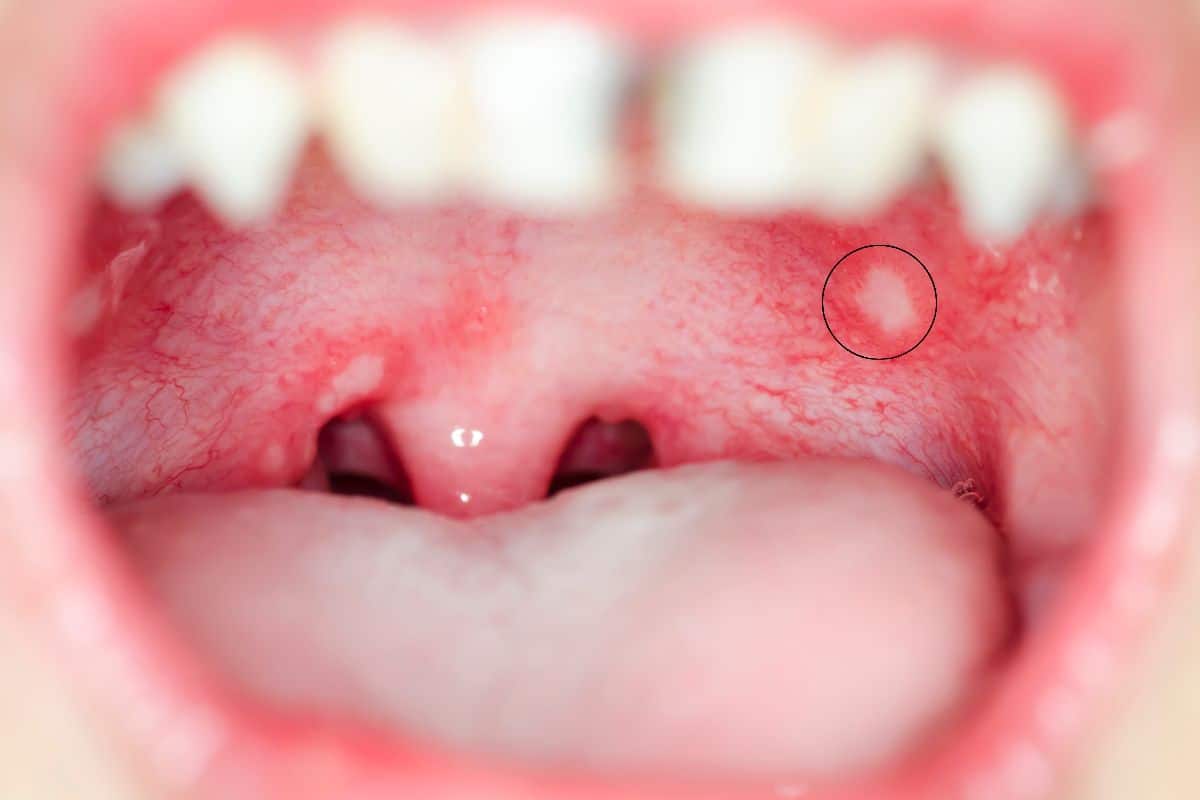
A Burned Roof of Mouth usually happens after eating or drinking something too hot, causing a minor burn to the thin, sensitive tissue on the upper inside of the mouth. It is one of the most common minor oral injuries because the roof of the mouth has very little protective tissue to buffer sudden heat. Although it often heals quickly, the area can remain sore and sensitive for several days.
Most burned palates heal on their own within 3 to 7 days without any medical treatment. The area may feel raw, blistered, or develop a thin white film (dead tissue) – all of which are normal parts of the healing process. The key is knowing what helps, what hurts, and when something is serious enough to see a doctor.
Why Does the Roof of Your Mouth Burn So Easily?
The palate is covered by a thin mucous membrane that’s exceptionally sensitive to temperature. Unlike your tongue, which you can partially retract, the roof of your mouth is stationary – it takes the full force of hot food or liquid the moment it enters.
Pizza, coffee, soup, and freshly baked pastries are the most common culprits. The heat is often trapped between the food and the palate, intensifying the burn. And because we’re often distracted or hungry, we don’t slow down enough to let things cool.
Burn Severity: Know What You’re Dealing With
| Severity | What It Feels Like | What It Looks Like | Healing Time |
| Mild (1st degree) | Stinging, tenderness, sensitivity to hot/cold | Redness, slight swelling | 3-5 days |
| Moderate (1st-2nd degree) | Throbbing pain, difficulty eating or talking | White or yellowish film, possible small blisters | 5-10 days |
| Severe (2nd-3rd degree) | Intense pain, numbness, or loss of sensation | Deep blistering, tissue sloughing, open sores | See a doctor |
What to Do Immediately After Burning Your Mouth
The first few minutes matter. Here’s exactly what to do:
- Drink cold water or milk right away – milk is especially soothing and helps neutralise heat. Sip slowly and hold it against the burned area.
- Suck on ice chips or eat a cold popsicle. The cold reduces inflammation and numbs the pain temporarily.
- Leave the area alone. Don’t poke at it with your tongue repeatedly – this slows healing and increases irritation.
- Rinse with cool (not ice-cold) salt water a few times a day. Mix ¼ teaspoon salt in a glass of water. This keeps the area clean and reduces swelling.
- Apply a thin layer of honey to the area if you can. Honey has natural antibacterial and anti-inflammatory properties and is one of the best home remedies for oral burns.
What NOT to Do
Some common instincts actually make a burned palate worse:
- Don’t eat spicy, acidic, or crunchy food – all of these irritate the already-raw tissue and slow healing.
- Don’t drink alcohol or very hot beverages – alcohol dries out oral tissue and more heat will worsen the injury.
- Don’t use commercial mouthwash (especially alcohol-based ones) on a fresh burn – they sting and can damage healing tissue.
- Don’t pick at blisters or peeling skin – the white film that forms is protective and peeling it off exposes raw tissue to bacteria.
Foods to Eat (and Avoid) While Healing
| Good to Eat | Avoid These |
| Yogurt, cold smoothies, ice cream | Pizza, hot soup, freshly baked bread |
| Soft cooked oats (cooled), scrambled eggs | Spicy food, citrus, tomato-based sauces |
| Mashed banana, avocado, soft cheese | Crunchy chips, crackers, toast |
| Cold water, milk, coconut water | Coffee, alcohol, carbonated drinks |
| Honey (applied directly or in warm – not hot – tea) | Mouthwash with alcohol or strong menthol |
Home Remedies That Actually Help
- Honey: Applied directly to the burn 2-3 times daily, it reduces inflammation and prevents infection. Manuka honey works especially well.
- Aloe vera gel (food-grade): Has cooling, anti-inflammatory properties. Use only food-safe aloe – not the kind meant for sunburns.
- Salt water rinses: Gentle antiseptic. Use 2-3 times daily, especially after meals.
- OTC pain relievers: Ibuprofen or acetaminophen can reduce pain and inflammation. Oral numbing gels (like those used for teething) can also temporarily numb the area.
When Should You See a Doctor?
Most burned palates don’t need medical care. But get checked if you notice:
- Severe blistering that covers a large area of the mouth
- Signs of infection – increasing pain after day 3, pus, fever, or swollen lymph nodes
- No improvement or worsening symptoms after 7-10 days
- Numbness or complete loss of sensation that doesn’t resolve
A chemical burn from bleach, cleaning products, or other substances should always be treated as a medical emergency – call poison control or go to an emergency room immediately.