

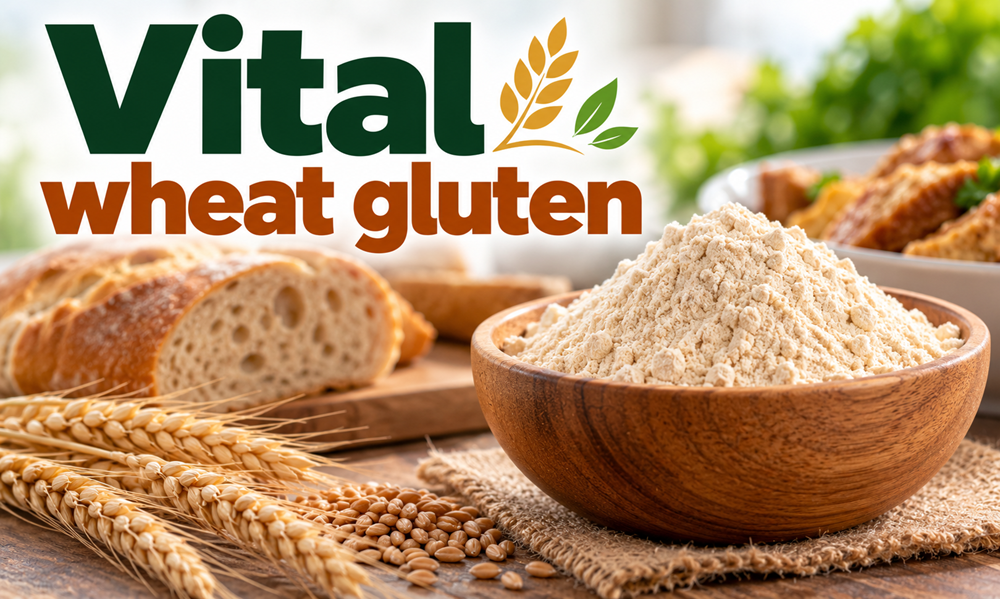
Vital wheat gluten is a concentrated form of the main protein found in wheat. It is commonly sold as a dry flour-like powder in US grocery stores and online, where home bakers use it to strengthen dough and plant-based cooks use it to make seitan. Once mixed with water, the gluten proteins form an elastic, chewy structure that can hold its shape during cooking.
For people who tolerate gluten, vital wheat gluten can be a convenient high-protein ingredient. It is especially useful in homemade meat alternatives because it provides a firm texture that is difficult to reproduce with beans or vegetables alone. Healthline’s guide to seitan describes seitan as hydrated and cooked wheat gluten that can be sliced, grilled, simmered, or added to a wide range of savory dishes.
What Is Vital Wheat Gluten?
Vital wheat gluten is made by combining wheat flour with water to develop gluten, then removing much of the starch. The remaining gluten-rich material is dried and ground into a powder. The FDA lists wheat gluten, including vital wheat gluten, as a food substance used for functions such as texturizing, stabilizing, thickening, and improving firmness.
Despite the word “wheat” in the name, this is not the same as ordinary whole-wheat flour. Regular flour contains starch, protein, fiber, and other components of the grain. Vital wheat gluten is much more concentrated in protein and behaves very differently when hydrated.
Vital Wheat Gluten vs. Seitan: What Is the Difference?
| Feature | Vital Wheat Gluten | Seitan |
| Form | Dry powder | Cooked, ready-to-eat or ready-to-cook food |
| Main ingredient | Concentrated wheat gluten | Vital wheat gluten or washed wheat dough plus liquid and seasonings |
| Typical use | Bread baking, dough strengthening, homemade meat substitutes | Stir-fries, sandwiches, tacos, stews, skewers |
| Texture | Flour-like before hydration | Dense and chewy after cooking |
| Gluten content | Very high | Very high |
In simple terms, vital wheat gluten is an ingredient, while seitan is a food made from that ingredient. Some traditional seitan is made by washing starch from a wheat-flour dough, but packaged vital wheat gluten makes the process much faster.
Is Vital Wheat Gluten High in Protein?
Yes. Because most of the starch has been removed, vital wheat gluten is protein-dense. Exact nutrition varies by brand, but a roughly 1/4-cup serving can provide about 20 grams of protein with relatively little fat. Prepared seitan is also typically high in protein, although its nutrition depends on the recipe, cooking liquid, and added ingredients.
One important limitation is amino acid balance. Wheat protein is relatively low in lysine compared with several other protein foods. That does not make it a “bad” protein, but people who rely heavily on seitan can improve dietary variety by also eating lysine-rich foods such as beans, lentils, soy foods, or quinoa.
US dietary guidance encourages eating a variety of protein foods rather than depending on one source. USDA MyPlate protein guidance highlights beans, peas, lentils, nuts, seeds, and soy products as plant-based protein options that can complement meals built around seitan.
What Are the Main Benefits?
- High protein density: It can add substantial protein to meals without requiring large portions.
- Useful meat-like texture: Hydrated gluten develops a chewy structure that works well in recipes that normally use chicken, beef, or pork.
- Low in saturated fat on its own: Plain vital wheat gluten contains very little fat, although prepared products may contain added oil.
- Versatile in cooking: It can be seasoned in many ways and used in sandwiches, stir-fries, wraps, bowls, stews, and grilled dishes.
- Helpful for some soy-free diets: Plain seitan can provide a non-soy plant protein option, but packaged versions should still be checked for soy ingredients.
How Is Vital Wheat Gluten Used in Baking?
Bakers sometimes add a small amount of vital wheat gluten to bread dough to increase elasticity and improve structure. It can be especially useful in doughs made with lower-protein flours or recipes that contain ingredients that weaken gluten development. Too much, however, can make bread unusually tough or rubbery, so it is best treated as a functional baking ingredient rather than an ordinary flour replacement.
Because brands and recipes differ, follow the amount suggested by the specific bread recipe rather than assuming more gluten will always create a better loaf.
How Can You Use It to Make Seitan?
A basic seitan mixture combines vital wheat gluten with water or broth and seasonings. Once hydrated, the mixture forms a stretchy dough that is kneaded briefly, shaped, and then cooked. Simmering, steaming, baking, or combinations of these methods can produce different textures.
Common flavor additions include garlic powder, onion powder, smoked paprika, nutritional yeast, herbs, tomato paste, and low-sodium broth. Soy sauce is also common, but it can add a significant amount of sodium.
What Should You Look for on a Nutrition Label?
| Label item | Why it matters | What to check |
| Protein | Main nutritional reason many people use the product | Compare grams per serving across brands |
| Sodium | Prepared seitan can be heavily seasoned | Choose lower-sodium options when possible |
| Added sugars | Some marinades and sauces contain sugar | Check both the Nutrition Facts and ingredient list |
| Serving size | Can make products look more or less nutrient-dense | Compare similar serving weights |
| Allergens | Wheat is a major US food allergen | Look for wheat declarations and any added soy |
Who Should Avoid Vital Wheat Gluten?
People with celiac disease should not eat vital wheat gluten or seitan. Gluten triggers an immune reaction in celiac disease that damages the small intestine, so even small amounts can be a problem. People with a wheat allergy also need to avoid it, and those with medically diagnosed non-celiac gluten sensitivity may need to avoid or limit gluten according to their clinician’s guidance.
The National Institute of Diabetes and Digestive and Kidney Diseases states that people with celiac disease must remove gluten-containing foods and drinks from their diet. Because vital wheat gluten is essentially concentrated gluten from wheat, it is not compatible with a gluten-free diet.
Is Vital Wheat Gluten Highly Processed?
Vital wheat gluten is processed because the starch and other wheat components are removed to concentrate the gluten proteins. Processing alone does not determine whether a food is nutritious. The more useful questions are how the ingredient fits into the overall diet and what else is included in the final product.
For example, homemade seitan made from vital wheat gluten, vegetables, herbs, and a moderate-sodium broth can be nutritionally different from a heavily salted breaded seitan product. Compare labels rather than judging all seitan products as identical.
Is Vital Wheat Gluten Good for Weight Loss or Muscle Building?
It can fit into either goal, but it is not a special fat-burning or muscle-building ingredient. Its high protein content may make it useful in meals designed to support fullness or resistance training. Body-weight change still depends on overall calorie intake and energy expenditure, while muscle gain also requires appropriate resistance training, adequate total protein, and enough calories and recovery.
Athletes and active adults should also consider protein variety. Combining wheat-based protein with legumes or soy foods can provide a broader amino acid profile across the day.
Frequently Asked Questions
Is vital wheat gluten the same as gluten flour?
The terms are sometimes used interchangeably, but products labeled vital wheat gluten are specifically concentrated wheat gluten. Always read the ingredient label because flour products can differ.
Is vital wheat gluten gluten-free?
No. It is the opposite of gluten-free because it is concentrated wheat gluten.
Can people with celiac disease eat seitan?
No. Seitan is made primarily from wheat gluten and should be avoided by people with celiac disease.
Is vital wheat gluten vegan?
Plain vital wheat gluten is plant-based. Packaged seitan products may contain other ingredients, so people following a vegan diet should still check the label.
Is seitan a complete protein?
Seitan contains essential amino acids but is relatively low in lysine. Eating a varied diet that includes beans, lentils, soy foods, or other protein sources can improve overall amino acid balance.
Can I use vital wheat gluten like regular flour?
Not as a direct one-for-one replacement. It has far less starch and much more protein than ordinary flour, so using large amounts can dramatically change texture.
Bottom Line
Vital wheat gluten is a concentrated wheat protein used in bread making and as the main ingredient in seitan. For people who tolerate gluten, it can be a convenient, protein-rich ingredient with a versatile texture. The healthiest way to use it is as part of a varied diet that also includes vegetables, whole grains, legumes, nuts, seeds, and other protein sources. People with celiac disease, wheat allergy, or a medical need to avoid gluten should not eat it.