

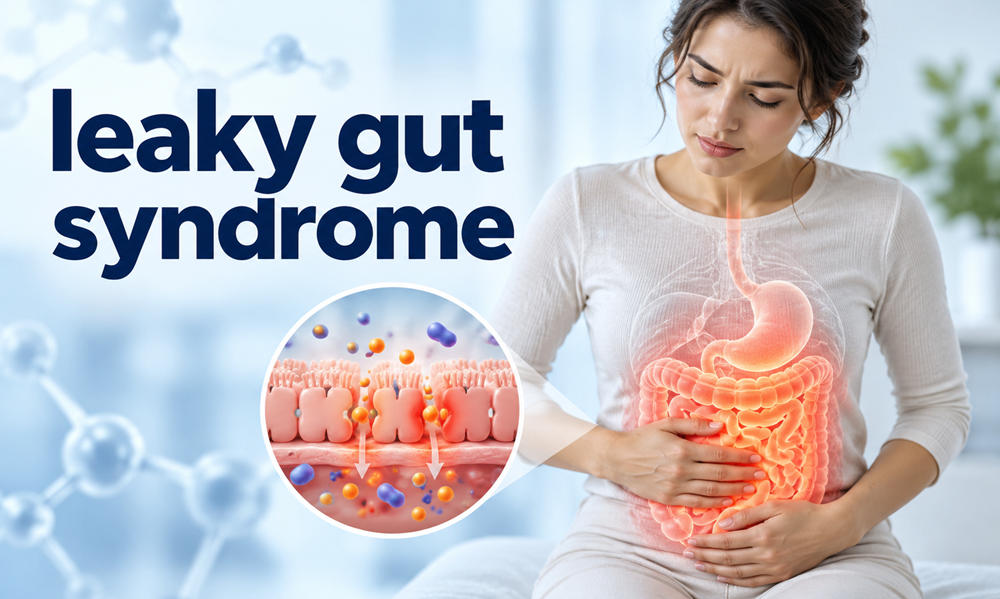
Leaky gut syndrome is a popular term used to describe the idea that the intestinal lining has become unusually permeable, allowing substances to pass through the gut barrier more easily than they should. In medicine, increased intestinal permeability is a real biological phenomenon, but “leaky gut syndrome” itself is not currently recognized as a standalone diagnosis.
That distinction matters because symptoms often blamed on a “leaky gut” can also come from conditions such as celiac disease, inflammatory bowel disease, irritable bowel syndrome, food intolerance, infection, or other digestive disorders. Healthline’s overview of leaky gut recovery notes that there is no single healing timeline because recovery depends on the underlying cause.
What Does “Leaky Gut” Actually Mean?
The intestinal lining is designed to be selectively permeable. It allows water, nutrients, and other small molecules to move into the bloodstream while helping keep bacteria, toxins, and larger particles inside the digestive tract. Tight junctions between intestinal cells help regulate this barrier.
In some diseases, inflammation or injury can disrupt the barrier and increase permeability. Researchers have documented this in conditions such as celiac disease and inflammatory bowel disease. What is less certain is whether increased permeability independently causes the wide range of problems often attributed to “leaky gut syndrome.”
Is Leaky Gut Syndrome a Real Medical Diagnosis?
Not in the way the term is commonly used online. Cleveland Clinic describes leaky gut syndrome as a hypothetical condition based on the real concept of increased intestinal permeability. There is currently no standard clinical test that doctors use to diagnose “leaky gut syndrome” as a separate disease.
This does not mean digestive symptoms are imaginary or unimportant. It means a clinician should look for established causes rather than assuming that increased permeability is the primary diagnosis.
| Term or Condition | Medical Status | What It Means |
| Increased intestinal permeability | Recognized biological finding | The gut barrier allows more substances through than usual |
| Leaky gut syndrome | Not a standard medical diagnosis | A proposed syndrome linking permeability to broad symptoms |
| Celiac disease | Established diagnosis | Immune reaction to gluten damages the small intestine |
| Inflammatory bowel disease | Established diagnosis | Chronic intestinal inflammation, including Crohn’s disease and ulcerative colitis |
| Irritable bowel syndrome | Established functional disorder | Abdominal pain with bowel changes without visible inflammatory damage |
What Symptoms Are Commonly Linked to Leaky Gut?
There is no official symptom list for leaky gut syndrome because it is not a recognized diagnosis. People who use the term commonly describe bloating, gas, abdominal discomfort, diarrhea, constipation, fatigue, or food-related symptoms.
These symptoms are nonspecific. They can occur with IBS, celiac disease, lactose intolerance, inflammatory bowel disease, infections, medication side effects, and many other conditions. Persistent symptoms should therefore be evaluated based on the pattern, severity, and associated signs rather than attributed to a leaky gut without testing for established disorders.
What Can Increase Intestinal Permeability?
Research suggests that intestinal permeability can change in association with several medical and lifestyle factors. The importance of each factor varies greatly from person to person.
- Celiac disease and exposure to gluten in people who have celiac disease
- Crohn’s disease and ulcerative colitis
- Certain gastrointestinal infections
- Heavy alcohol use
- Some medications, including frequent use of nonsteroidal anti-inflammatory drugs such as ibuprofen or naproxen
- Severe illness, inflammation, or intestinal injury
How Long Does It Take to Heal?
There is no universal answer. The intestinal lining can recover when the underlying problem is identified and effectively treated, but the timeline can range from days or weeks for symptom improvement to months or longer for complete tissue recovery.
For example, NIDDK guidance on celiac disease explains that many people with celiac disease notice symptom improvement within days to weeks after starting a strict gluten-free diet, while healing of small-intestinal damage may take longer.
Someone with inflammatory bowel disease may have a different recovery pattern depending on disease severity, medication response, and whether inflammation is brought under control. Because the causes differ, promises that a supplement or diet can “seal the gut” in a fixed number of days are not supported by good clinical evidence.
| Situation | What Helps Most | What to Expect |
| Celiac disease | Strict lifelong gluten-free diet | Symptoms may improve within days to weeks; intestinal healing can take longer |
| Inflammatory bowel disease | Condition-specific medical treatment | Recovery depends on inflammation control and disease severity |
| Medication-related irritation | Reviewing the medication with a clinician | Improvement varies after the trigger is reduced or removed |
| Unexplained bloating or bowel changes | Diagnosis first | Timeline depends on whether the cause is IBS, intolerance, infection, celiac disease, or another condition |
Can Diet Help Support Gut Health?
A balanced diet can support digestive health, but there is no scientifically established “leaky gut diet.” In general, most people benefit from adequate fiber, fruits, vegetables, whole grains, legumes, nuts, seeds, and other minimally processed foods if they tolerate them.
Fermented foods such as yogurt, kefir, kimchi, and sauerkraut may also fit into a healthy diet, although they are not a cure for intestinal permeability. People with specific digestive conditions may need individualized adjustments. For example, someone with celiac disease must avoid gluten, while a person with IBS may temporarily benefit from a clinician-supervised low-FODMAP approach.
Highly restrictive elimination diets are not appropriate for everyone and can create nutrient gaps. If you are cutting out several food groups because of digestive symptoms, a registered dietitian can help determine whether the restriction is necessary and how to maintain adequate nutrition.
Do Probiotics, Glutamine, or “Gut-Healing” Supplements Work?
Some supplements are marketed with claims that they repair the intestinal barrier, but evidence varies by product, dose, and health condition. Probiotics can be useful in certain gastrointestinal situations, but benefits are strain-specific and they are not a universal treatment for leaky gut.
Glutamine, zinc, collagen powders, herbal blends, and other products are also promoted for gut repair. Some have been studied in limited clinical settings, but there is not enough evidence to recommend them as a standard treatment for leaky gut syndrome.
Supplements can also interact with medications or be inappropriate for people with certain medical conditions. It is safer to focus first on diagnosis, nutrition, sleep, alcohol intake, medication review, and evidence-based treatment of any underlying gastrointestinal disease.
Can You Test for Leaky Gut at Home?
There is no validated home test that can diagnose leaky gut syndrome. Research laboratories may assess intestinal permeability using specialized methods, but these tests are not routinely used to diagnose a broad “leaky gut” condition in everyday clinical care.
Commercial stool panels, food sensitivity tests, and zonulin tests are sometimes marketed as ways to identify leaky gut. Results can be difficult to interpret, and they may not establish the cause of symptoms. If you have ongoing digestive problems, standard medical evaluation is more useful because it can check for conditions that have established diagnostic criteria and treatments.
What Habits Can Support a Healthy Gut Barrier?
- Eat a varied, nutrient-dense diet with enough fiber if you tolerate it.
- Avoid smoking and limit heavy alcohol intake.
- Use NSAIDs only as directed and discuss frequent use with a healthcare professional.
- Get regular physical activity and adequate sleep.
- Manage diagnosed gastrointestinal conditions consistently.
- Avoid unnecessary elimination diets and unproven detox plans.
- Discuss persistent symptoms with a clinician rather than relying only on supplements.
When Should You See a Doctor?
Make an appointment if digestive symptoms are persistent, worsening, or interfering with daily life. Seek medical attention promptly if you have blood in the stool, black stools, unexplained weight loss, persistent vomiting, fever, severe abdominal pain, dehydration, anemia, or symptoms that wake you repeatedly at night.
These signs can point to conditions that require proper diagnosis and should not be managed as a self-diagnosed leaky gut problem.
Frequently Asked Questions
Can leaky gut syndrome be cured?
There is no single cure because leaky gut syndrome is not a recognized standalone diagnosis. Increased intestinal permeability can improve when an underlying condition such as celiac disease or inflammatory bowel disease is effectively treated.
How do I know if I have leaky gut?
You cannot reliably diagnose it from symptoms alone. Bloating, fatigue, diarrhea, and abdominal discomfort have many possible causes. A healthcare professional can evaluate for established digestive conditions.
Does gluten cause leaky gut in everyone?
No. Gluten is medically important for people with celiac disease, where it triggers intestinal damage. Most people without celiac disease do not need to remove gluten solely to prevent leaky gut.
Are probiotics good for leaky gut?
Probiotics may help certain digestive conditions, but effects depend on the specific strain and condition. They are not an established cure for leaky gut syndrome.
Can stress make gut symptoms worse?
Yes. Stress can influence gut motility, sensitivity, eating habits, and the gut-brain connection. Managing stress may help symptoms, although it does not replace evaluation for an underlying disorder.
What is the fastest way to heal intestinal permeability?
The most effective approach is to identify and treat the cause. There is no proven shortcut or supplement that reliably repairs the intestinal barrier for everyone.
Bottom Line
Increased intestinal permeability is a real biological finding, but leaky gut syndrome is not currently accepted as a standalone medical diagnosis. If you have persistent digestive symptoms, the most useful step is to look for an established cause rather than trying to “seal” the gut with restrictive diets or unproven supplements. Treating conditions such as celiac disease or inflammatory bowel disease, eating a balanced diet, limiting known irritants, and following evidence-based medical care can support recovery of the intestinal lining.